Fabric The notebook
Wool felt or acrylic felt? Testing both side by side
How wool, wool-blend and acrylic craft felt differ in strength, pilling, washing and stitching, and which one to use for which softie.
Pinned up on
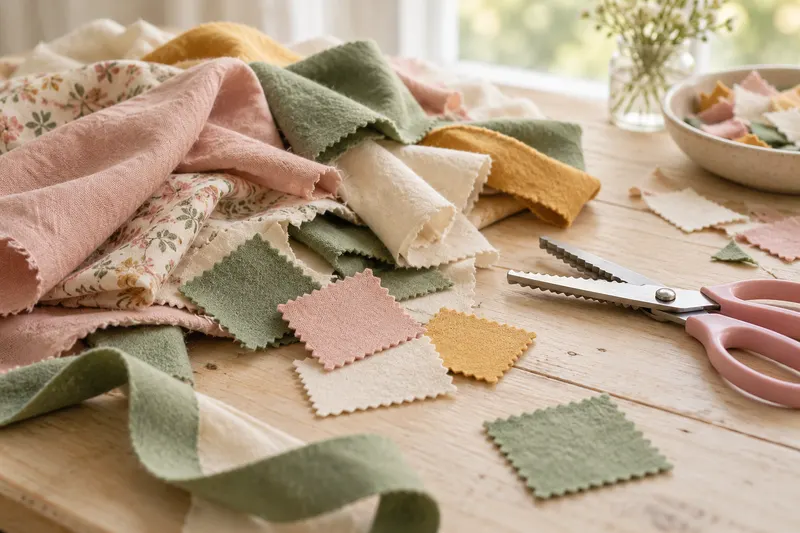
Craft felt is not one material. The cheap sheets in every craft shop are usually 100% acrylic or polyester. Proper wool felt costs several times more. Wool-blend felt (often 20–35% wool with viscose or polyester) sits in between. They look nearly the same on the shelf and behave very differently in a toy.
The quickest way to know your felt is to test it. Here is the comparison worth doing once, and what you will usually find.
Step 1: Label the squares
You need
- felt squares
- permanent marker
Cut a 10 cm square of each felt and write the type and shop on the corner. Measure each square exactly and note it. You will compare after washing.
Step 2: The pull test
You need
- the squares
Hold a square at opposite edges and pull. Acrylic craft felt thins and stretches out quickly, and a thin sheet can tear. Wool felt is denser and springs back. Wool-blend usually holds well. For anything that will be stuffed firmly, you need felt that does not stretch, because stuffing pressure stretches a weak felt into a lumpy shape.
Step 3: The rub test
You need
- a second square of the same felt
Rub two pieces of the same felt together fifty times, as a child’s hands would. Acrylic felt pills and goes fuzzy quickly. Wool felt keeps a smooth surface much longer. Blends are in between, with the higher wool content doing better.
Step 4: The wash test
You need
- bowl of warm water
- wool wash
Hand wash all the squares together in warm water, squeeze gently, and dry them flat. Measure again. Wool felt can shrink and thicken a little, more if it is agitated or the water is hot. Acrylic shrinks less but may come out limp and crinkled. This is why a felt toy is a sponge-clean or gentle hand-wash toy, not a machine-wash one.
Step 5: Decide by use
You need
- your notes
For a toy that will be handled and loved, use wool or a good wool blend. It stitches crisply, keeps its edges and lasts. Keep acrylic felt for decorations, practice pieces and small details that are not stretched by stuffing. For a baby toy that will need regular machine washing, choose a knit fleece or cotton instead of felt.